
ADVIA CREDIT UNION
Services we provide:
- Discovery
- Digital Strategy
- Content Analysis
- Custom Integrations
- UX/UI Design
- Website Development
- Hosting
- Support
About Advia Credit Union
Advia Credit Union has a mission to provide financial advantages to its members by providing advice, advocating for members, and offering advantages other financial institutions don’t. This is accomplished through innovative financial solutions and a new, scalable website. For this new site, Advia sought to proactively provide the quickest and easiest digital solution for members to get the best user experience. Advia is not like other financial institutions; this is illustrated in Advia’s commitment to serving the ever-changing financial needs of its members. One of its core values is to drive progress by engaging in a spirit of innovation and developing new digital service tools for its members. This led to an innovative website redesign to give members easy access to information digitally.
The Challenge
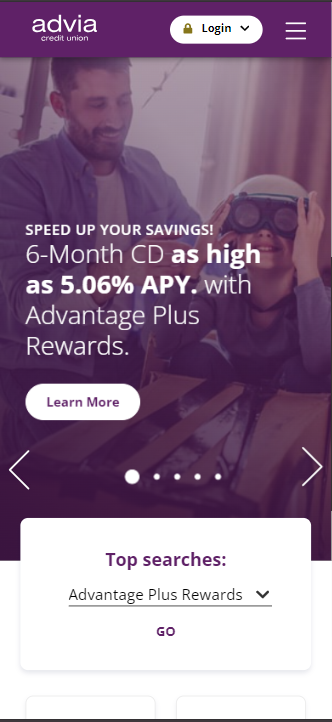
The old website was not intuitive, and the overall digital experience lacked. The lending areas of the old site for both mortgages and auto loans were not producing results. With increased in mobile traffic, the site needed an improved mobile user experience. A major challenge facing Advia’s business team was the organization and content hierarchy of the old site. The content was repetitive and text-heavy, and members were confused about where to find the information they sought. Other obstacles included Advia’s team being unable to easily update the content and structure of the pages on the old website.
Goals for the New Site:
- Improved navigation layout
- Measurable enhancements
- Increase time spent on the website
- Meets brand standards with redesign
- Increase overall visitors engagement
- Increase content management efficiency
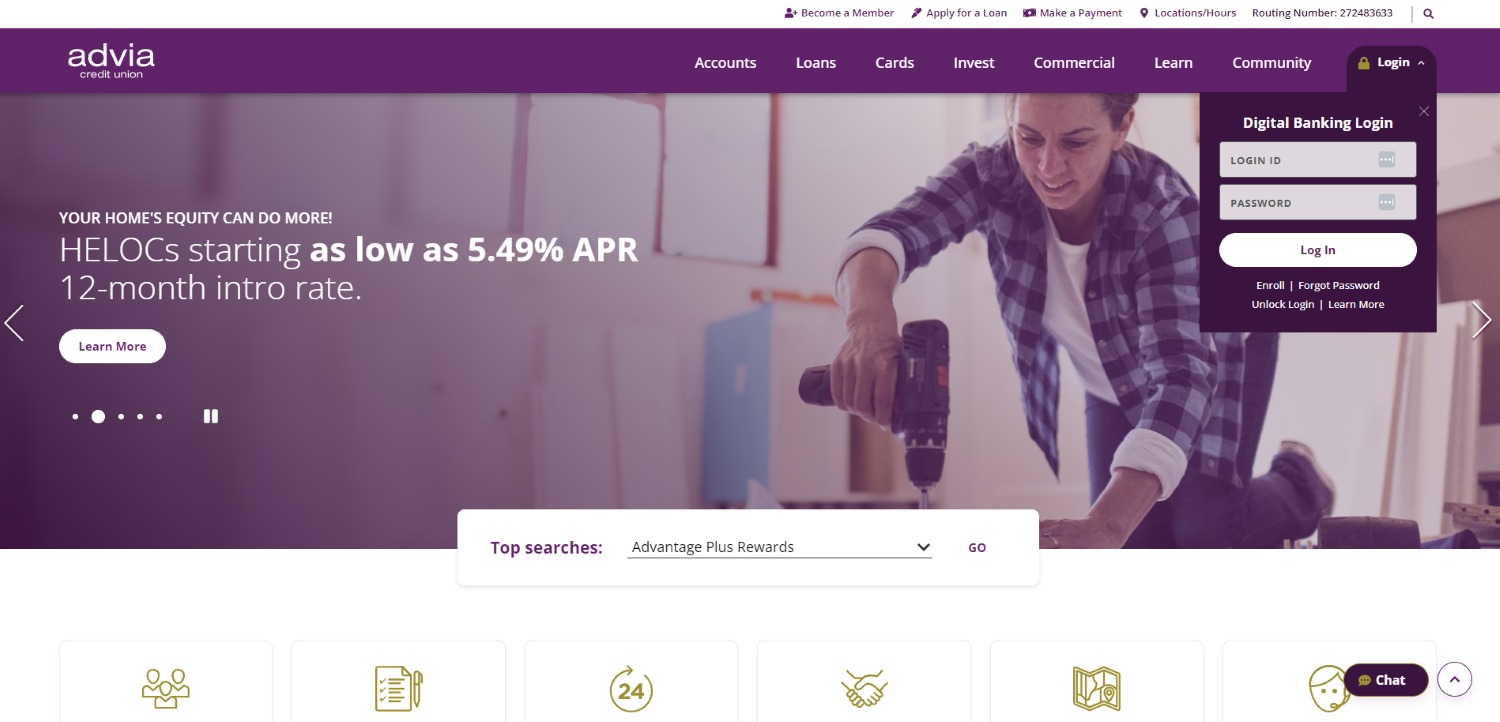
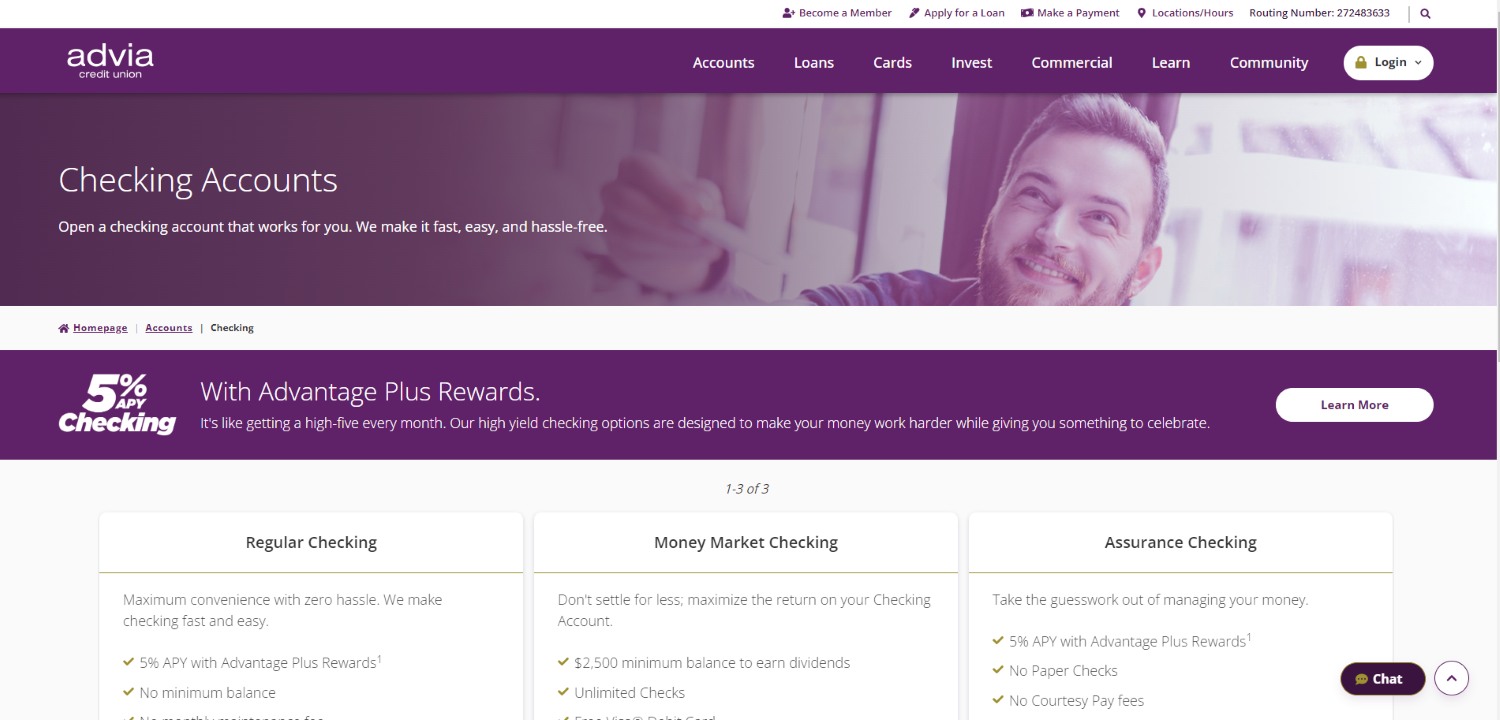
Advia wanted to create a “one-stop” resource center to educate members on digital banking—including forms, links, documents, and video tutorials. Two goals for the new Advia Credit Union website were simplifying content and allowing self-service for members. Advia did not want to reinvent the wheel in terms of UI but wanted to deliver a better digital experience to its members and potential new members. The new website provides a clean and clear navigation experience to eliminate clutter and confusion.
The Right Platform
SilverTech reviewed several CMS/DX platforms with Advia. Progress Sitefinity was the chosen platform, giving Advia a fully optimized digital experience. Using the page templates on the Sitefinity platform allows Advia to accomplish the goals for the new site by enhancing the design and layout of the website with ease. The new website improves the user experience with the use of properly placed navigation buttons and call to actions (CTAs) clearly directing users through the content on the page to the sub-pages. Advia’s site has an engaging navigation and advanced filter functionality allowing users to get to the content they are looking for with ease. Additionally, the Advia content team can seamlessly update and create pages within the Sitefinity CMS, keeping the website current and relevant.
RESULTS
How to Find and Use High-Quality Images for Your Website
10/1/24
Gathering imagery can be one of the most time-consuming tasks during a website build. Deciding where to source your images, managing licensing costs, hiring photographers, and defining the story you want to tell through visuals can quickly become overwhelming. This can eat into valuable time and resources, sometimes delaying other critical parts of the project.
Why Are Images Important for a Website's Success?
Imagery plays a crucial role in telling your site’s story and helping users quickly grasp its purpose. Poor-quality images can make your website look unprofessional, leading to bad first impressions and reduced user engagement. Additionally, unoptimized images can significantly slow download times—just a 3-second delay can cause nearly 50% of visitors to leave before the site even finishes loading.
The first image users see is particularly important, as it sets the tone for their entire experience. It can determine whether someone stays to explore your content or leaves before even scrolling down. That’s why it’s essential to choose visuals that grab attention, effectively communicate your message, and resonate with your target audience.
Sourcing Your Imagery
Choosing how to source your imagery is where the process truly begins. Here are the main methods:
1. Using Stock Photo Websites (e.g., iStock, Unsplash)
Pros:
- No need to hire photographers or use in-house resources.
- Thousands of photos are readily available and easily searchable.
- A photo exists for nearly anything you might need.
Cons:
- Limited customization of imagery.
- Images are gathered without specific design considerations for your website.
- You often have to pay for licensing, and you won’t own the photos.
2. Contracting or Hiring a Photographer
Pros:
- Tailored to your specific needs.
- Provides consistency in style and branding.
- Delivers a polished, professional look superior to DIY or stock images.
Cons:
- Expensive, especially with travel or equipment costs.
- Once the photo shoot is complete, changing the images is difficult and costly.
Avoiding Common Image Mistakes
When gathering images for your website, keep these key aspects in mind:
1. Aligning Images with Website Design
Beautiful photos can enhance your website, but if they don’t fit within the design, they can cause issues. Ensure that your images work with the dimensions of your website components (e.g., widgets, banners, galleries).
- Why it matters: Improper image sizing can result in awkward cropping, or important details being lost, leading to poor visual presentation.
- Tip: Check aspect ratios and resolution requirements for different sections of your site before selecting or creating images.
2. Optimizing Image File Sizes for Web Performance
High-quality images are important for aesthetics, but large file sizes can harm website performance. Unoptimized images can slow down page load times, frustrating users and increasing bounce rates.
- Why it matters: Large image files can slow down your website, especially for mobile users or those with slow internet. This impacts both user experience and SEO rankings.
- Tip: Use image compression tools to reduce file sizes without sacrificing quality. Aim for a balance between visual appeal and quick load times by using JPEGs for photos and PNGs for graphics that require transparency.
Common tools to resize images include:
- TinyPNG: Compresses PNG and JPEG images, reducing file size without compromising quality.
- Image Resizer: Allows resizing, cropping, and rotating images online. You can customize width and height.
Even programs as basic as Paint 3D can help you edit and resize images with ease, regardless of your photo editing skills.
Want to learn more? Check out our article on Image Optimization for additional tips!
Enhancing Accessibility and SEO with Alt Tags
Including alt tags, or alternative text, for your images is essential for both accessibility and SEO. Alt tags provide descriptions for screen readers, making your site more accessible to visually impaired users. They also help search engines understand your images, improving your site’s search ranking.
To maximize impact, keep alt text concise yet descriptive. For example, instead of “dog,” use “Golden retriever playing in a park.” This ensures your images contribute to a better user experience and help drive traffic from image searches.
Conclusion
There’s no one-size-fits-all solution for gathering website imagery, but that doesn’t mean you can’t find the perfect approach for your organization’s needs. Consider the tips above to guide your decision-making process and create a visually stunning, high-performing website.