
ADVIA CREDIT UNION
Services we provide:
- Discovery
- Digital Strategy
- Content Analysis
- Custom Integrations
- UX/UI Design
- Website Development
- Hosting
- Support
About Advia Credit Union
Advia Credit Union has a mission to provide financial advantages to its members by providing advice, advocating for members, and offering advantages other financial institutions don’t. This is accomplished through innovative financial solutions and a new, scalable website. For this new site, Advia sought to proactively provide the quickest and easiest digital solution for members to get the best user experience. Advia is not like other financial institutions; this is illustrated in Advia’s commitment to serving the ever-changing financial needs of its members. One of its core values is to drive progress by engaging in a spirit of innovation and developing new digital service tools for its members. This led to an innovative website redesign to give members easy access to information digitally.
The Challenge
The old website was not intuitive, and the overall digital experience lacked. The lending areas of the old site for both mortgages and auto loans were not producing results. With increased in mobile traffic, the site needed an improved mobile user experience. A major challenge facing Advia’s business team was the organization and content hierarchy of the old site. The content was repetitive and text-heavy, and members were confused about where to find the information they sought. Other obstacles included Advia’s team being unable to easily update the content and structure of the pages on the old website.
Goals for the New Site:
- Improved navigation layout
- Measurable enhancements
- Increase time spent on the website
- Meets brand standards with redesign
- Increase overall visitors engagement
- Increase content management efficiency
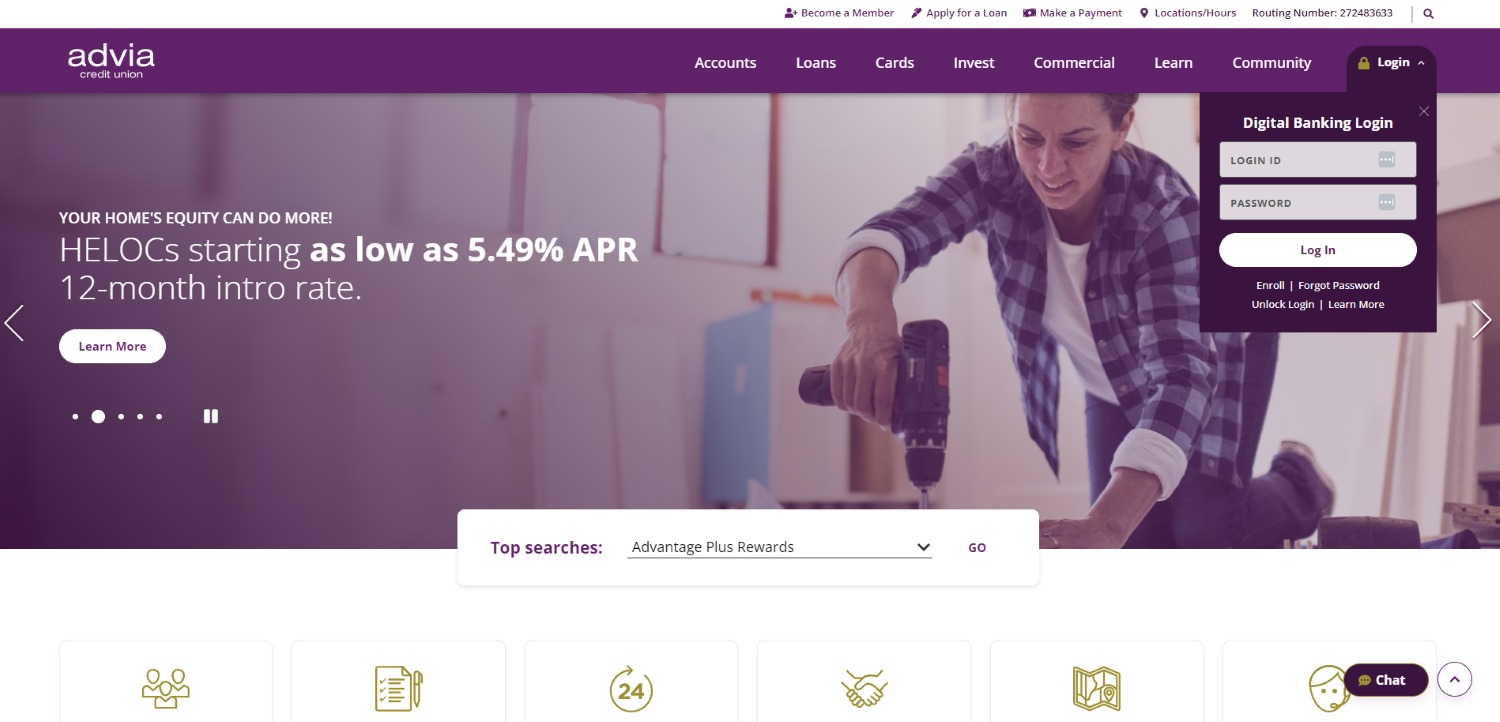
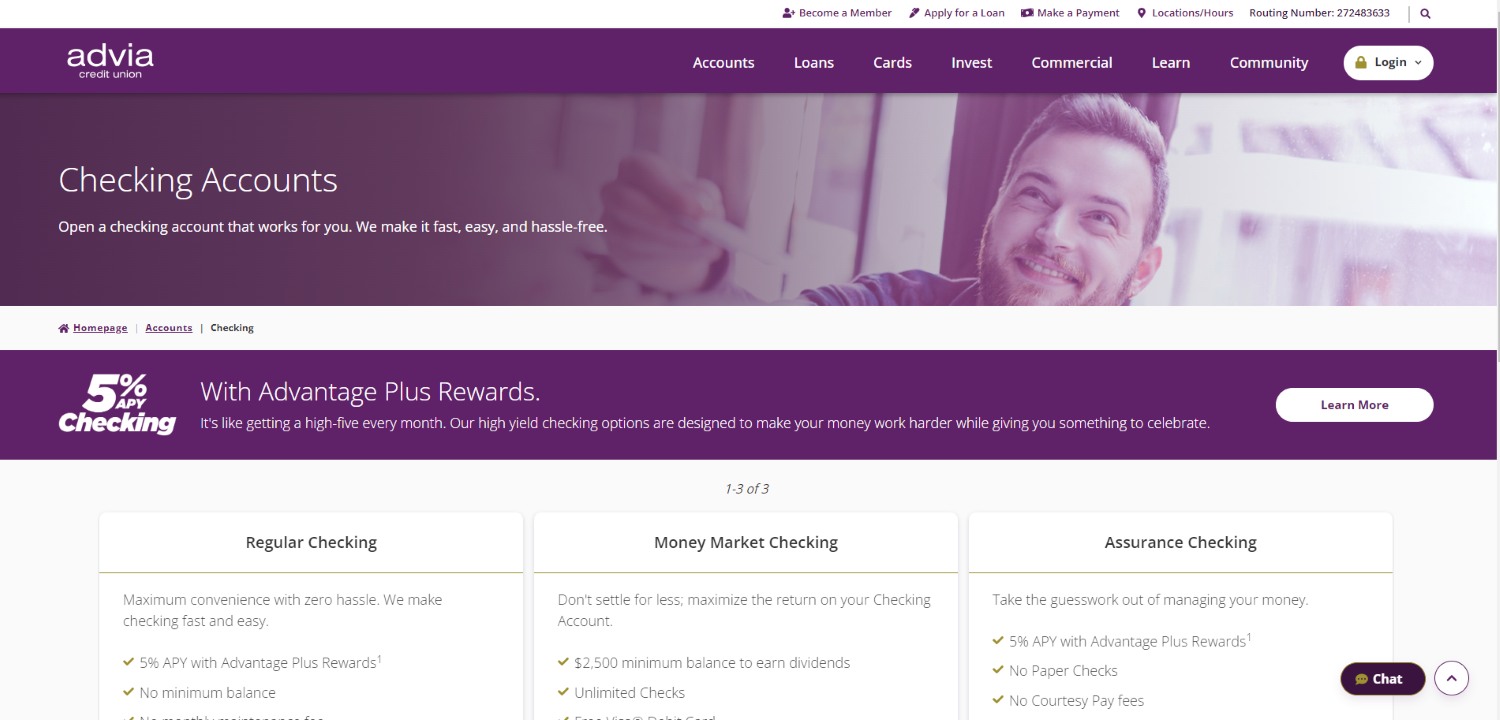
Advia wanted to create a “one-stop” resource center to educate members on digital banking—including forms, links, documents, and video tutorials. Two goals for the new Advia Credit Union website were simplifying content and allowing self-service for members. Advia did not want to reinvent the wheel in terms of UI but wanted to deliver a better digital experience to its members and potential new members. The new website provides a clean and clear navigation experience to eliminate clutter and confusion.
The Right Platform
SilverTech reviewed several CMS/DX platforms with Advia. Progress Sitefinity was the chosen platform, giving Advia a fully optimized digital experience. Using the page templates on the Sitefinity platform allows Advia to accomplish the goals for the new site by enhancing the design and layout of the website with ease. The new website improves the user experience with the use of properly placed navigation buttons and call to actions (CTAs) clearly directing users through the content on the page to the sub-pages. Advia’s site has an engaging navigation and advanced filter functionality allowing users to get to the content they are looking for with ease. Additionally, the Advia content team can seamlessly update and create pages within the Sitefinity CMS, keeping the website current and relevant.

RESULTS
SEO & GEO in 2026: How Search Strategies Are Changing – and What to Do About It
By: Erin Presseau | 12/16/25
SEO isn’t going away in 2026 — it’s evolving. As AI-powered search experiences like Google AI Overviews, ChatGPT, and Perplexity become part of how people research and compare options, brands must think beyond rankings alone. Generative Engine Optimization (GEO) builds on traditional SEO by helping AI systems understand, trust, and reference your content in summaries and conversational answers. The strongest strategies combine solid SEO fundamentals with GEO best practices, ensuring your brand is visible during early discovery and ready to convert high-intent visitors once they reach your website.
Is SEO dead?
Search optimization is changing fast, but not yet in the dramatic way some headlines suggest “SEO is dead”. SEO isn’t disappearing in 2026. However, what is changing is how people find or search for information, how search engines present it, and how brands earn visibility and trust along the way.
AI-powered search experiences, such as Google’s AI overviews and generative assistants like ChatGPT and Perplexity, are now influencing how users research, compare and make buying decisions. These tools are becoming part of the early discovery process, especially for complex or high consideration purchases.
For marketers, this doesn’t mean ignoring SEO, it means expanding it. SEO must evolve beyond rankings alone and expand into Generative Engine Optimization (GEO). GEO is the practice of making your content visible, understandable and credible/trusted by AI-driven search experiences (engines).
SEO Isn’t Going Away. It’s Becoming the Foundation For GEO
A common misconception is that AI-driven search will replace SEO. However, AI systems rely on the same SEO fundamentals we’ve always optimized for. High quality, well-structured, authoritative and unique content is still important – like it always has been.
What is changing is how search results are delivered and consumed.
With AI-driven search (GEO) optimization:
1. The results are displayed as summaries, overviews and conversational responses
2. AI systems evaluate clarity and context – and not just relevance or rankings
3. Users may get the information they need, without having to click any links – this could result in less traffic to your site (at least initially)
4. Authoritative mentions from reputable sources matter even more – they've always mattered for SEO but GEO looks for more than backlinks – it places more emphasis on context and understanding searcher intent
Why You Should Add GEO to Your SEO Strategy ASAP
Gartner predicts that traditional search engine traffic will decline by 25% by 2026 as AI assistants are being used more and more for early-stage research. That shift can impact raw traffic numbers – but traffic alone is not a great measure of success, anyway. Traffic with buying intent is.
The real opportunity for marketers is to be visible where decision making now often starts – with the AI assistants. If mentions of your brand drop off because you are not optimized for GEO, you are out of the game before it even starts.
GEO Practices to Add to Your Search Strategy
In addition to solid SEO practices, these additional GEO recommendations should help make meaningful impact to your search strategy in no time:
1. Write content that answers the questions your buyers are asking.
a. Structure pages to include FAQs or question/answer type content
b. Use clear headings, subheads and plain language
c. Include summaries or overviews in addition to more detailed content – especially if that overview can help an AI assistant understand context of what you are trying to say in the detailed content
2. Become an expert on topics that will interest your audience.
a. In addition to optimizing pages, look at creating authority around topic clusters
b. Connect pages with a common theme through internal linking
c. Create summaries where it makes sense to provide quick context of content
3. Use schema structure and markup that AI can understand.
a. Proper tagging and heading hierarchy (H1, H2, etc.)
b. Add more schema markup than you thought you needed for SEO (go beyond the basics and markup articles, authors, FAQs, news, services, etc.)
4. Build authority on and off the website
a. Backlinks matter more than they did in traditional SEO because AI places more emphasis on who is talking about you, why, and where.
b. Get mentions of your brand in articles, forums, ratings, reviews and other places that prove your authority/connection to the market and to your customers.
Also, don’t forget to take a hard look at your website’s content. If AI absorbs more top of funnel discovery, then users who eventually land on your website likely have good intent. What path have you carved for them to take action or to complete their transaction with you?
The bottom line is that SEO isn’t being replaced in 2026 - it’s becoming more important than ever. GEO doesn’t compete with SEO, it builds on it. The brands that win will be the ones that maintain strong SEO fundamentals while also adapting their content and authority to show up in AI-driven discovery experiences. AI assistants can’t recommend or reference your brand if they don’t understand it, trust it, or see it as relevant.
By investing in an SEO + GEO strategy now, you can ensure your brand is visible at the moment research begins. Then, when buyers with real intent land on your website, make sure that experience is designed to convert that interest into action.
Categories:
SEO/GEO